
03 Sep 2026


.webp)


As AI workloads scale, data centers are facing new operational challenges that can cause construction and interconnection delays. Two key impediments have arisen: 1) extreme load variability of GPUs, and 2) grid operators’ need for large loads to remain connected during grid disturbances. Addressing these issues is beyond the ability of both UPS based systems, as well as traditional grid-forming Battery Energy Storage Systems (BESS). With these new challenges, obtaining grid interconnections and protecting on-site generation from load fluctuations are becoming the critical challenges to the deployment of data centers. As the largest US manufacturer of energy storage inverters for utility-scale projects, EPC Power Corp. (EPC Power) presents a clean solution to both challenges in the form of its Agile Grid-Forming technology.
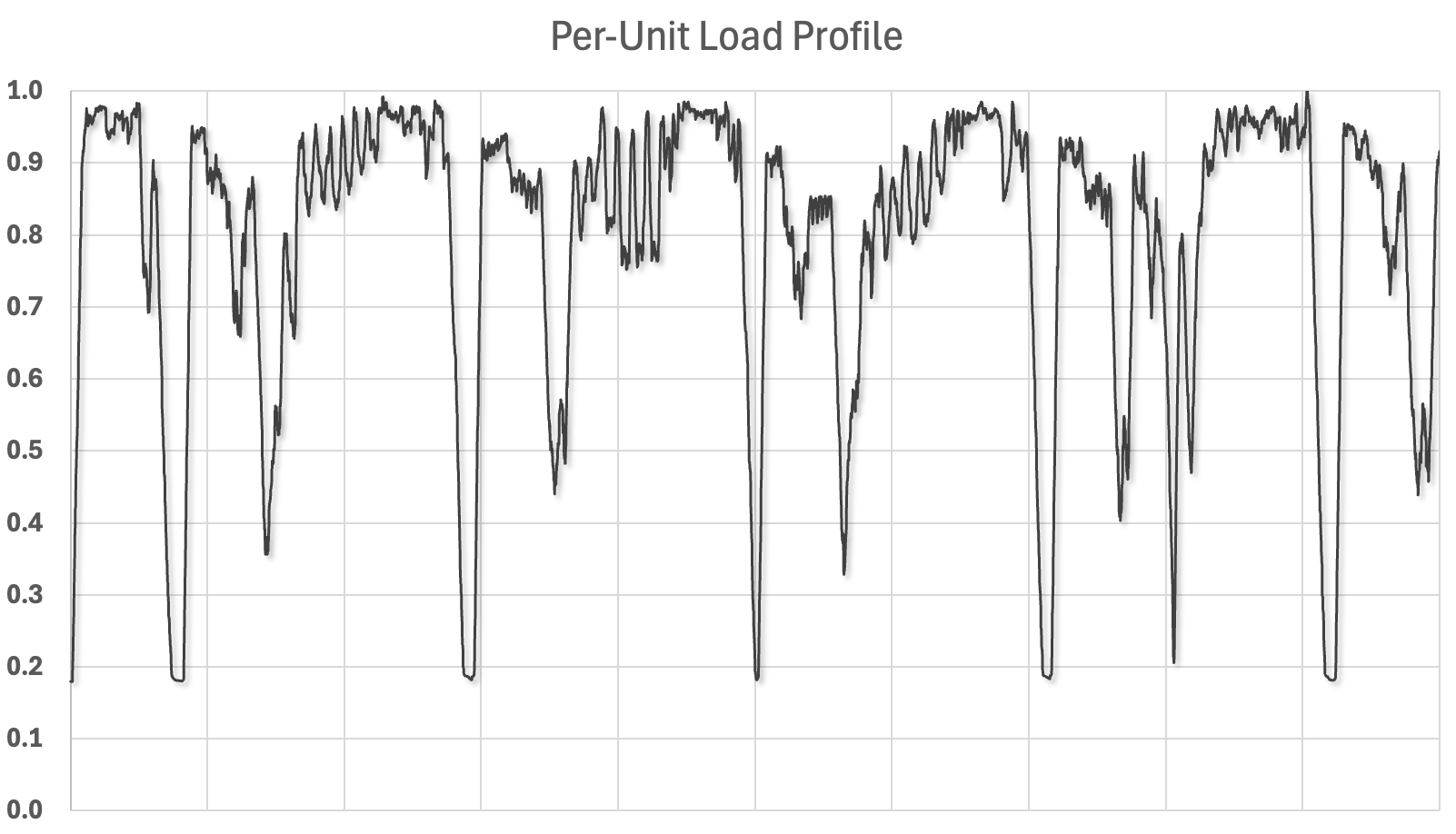
AI data centers, particularly those running GPU-intensive workloads, exhibit highly variable power profiles. These rapid fluctuations cause power quality issues, and even more importantly, damage to generation assets through torque pulsations.
To smooth this load, a few locations stand out: near the load (at the rack), at the UPS, or at the substation/connection to the grid. Rack-based solutions seem to be a great, albeit rather expensive, place to start. Most rack solutions are based on supercapacitors or other short duration energy storage technology to take out the most severe ramps. If this is the only solution, more energy storage (i.e. longer duration) is still needed elsewhere to bring ramp rates low enough to comply with turbine, reciprocating engines, or utility rate limitations. The end result is an expensive and complex solution, which consumes data center whitespace.
Smoothing at the UPS gets the equipment somewhat out of the data center and has a little longer storage duration (minutes), but these systems weren’t originally designed to handle the severe ramp of the load, nor are they as robust as even standard BESS technology when it comes to maintaining the load on the utility or prime mover during a disturbance. Still, a few questions remain: Are minutes of energy storage enough? Can the UPS survive long-term with severe thermal cycling? Is the true purpose of the UPS still appropriate for this application?
When we look at smoothing the load at the utility connection, this location allows the use of BESS for other grid benefits outside of the base load smoothing use case (arbitrage, demand management, ancillary services, etc.). The first approach we’ll evaluate is a grid-following BESS solution. In this type of system, the command setpoint for power is decided by a higher-level controller (Power Plant Controller, or PPC) which inserts a delay of tens to hundreds of milliseconds until the signal reaches the inverter. This delay severely limits the ability of the system to null out load fluctuations.
The next best solution is a more advanced “grid-forming” BESS solution. These systems are better at reacting on their own in a few milliseconds to frequency and voltage deviations caused by the load. However, the system response greatly depends on whether the BESS is grid-connected, the strength of the grid, on-site generation, etc. Ultimately, a grid-forming BESS can only compensate 40%-60% of the load fluctuations. While this can reduce the issue, it still doesn’t solve the issue.
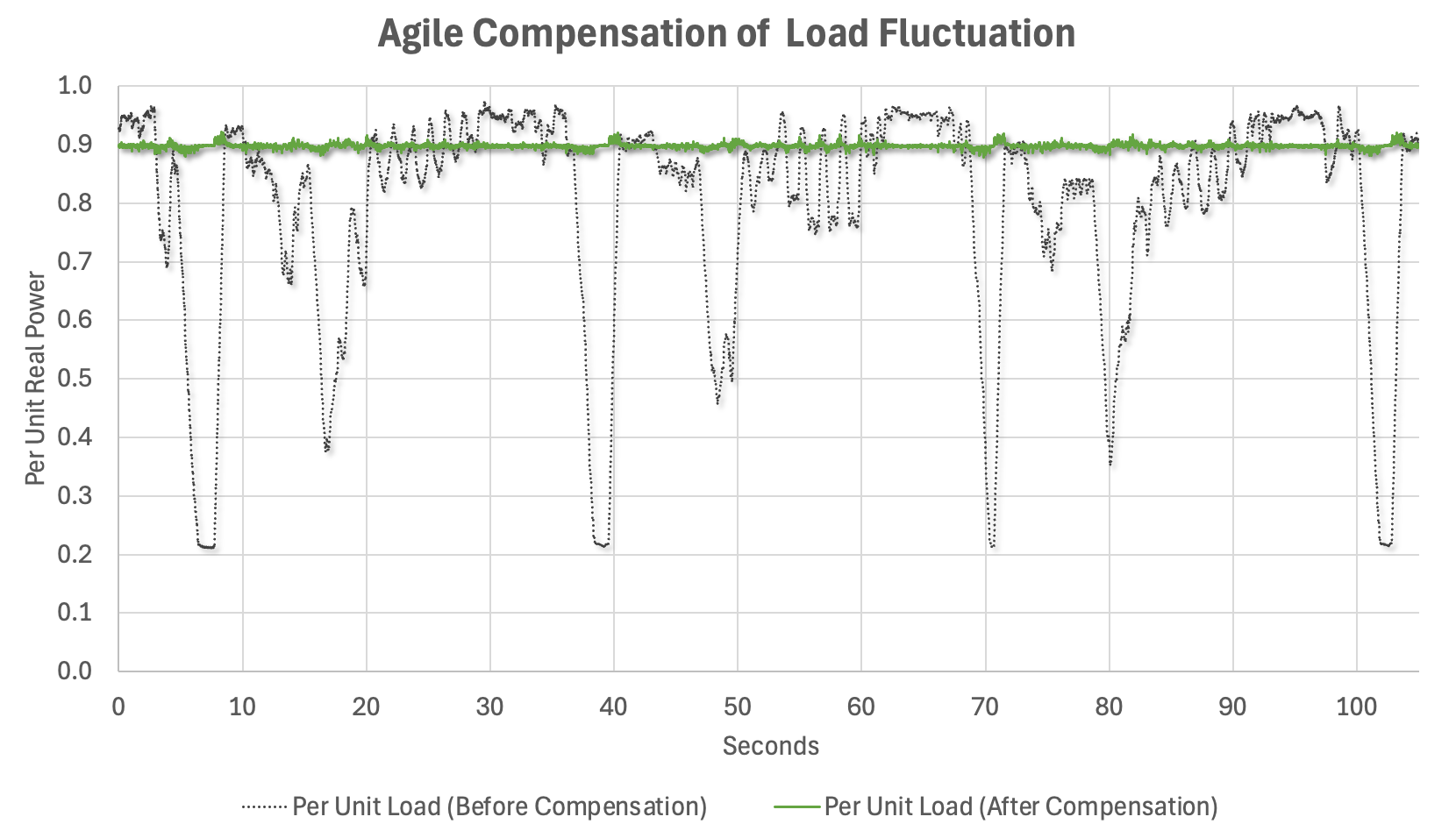
The next evolution of a grid-forming solution is EPC Power’s Agile Grid Forming BESS. Improving upon grid-forming BESS, an Agile Grid Forming BESS can cleanly compensate nearly 100% of the load step, far-surpassing the performance of advanced grid-forming solutions. This performance can be had both in strong utility-connected systems such as PJM, or weak islanded systems with on-site gas turbines.