Grid Stability Starts with Ride-Through Capabilities.

EPC Power Delivers.

As inverter-based resources make up more of the grid, a single trip offline is more disruptive than it used to be. When a voltage sag, swell, or frequency event hits and inverters disconnect instead of holding on, the grid loses capacity at the exact moment it needs it most.  This can turn a local disturbance into a wider stability event.

M System and MRACK System are built to stay connected when it matters most. Their SiC-based digital control platform responds in milliseconds to voltage and frequency disturbances, riding through grid events rather so your BESS asset acts as a stabilizing resource for the grid.
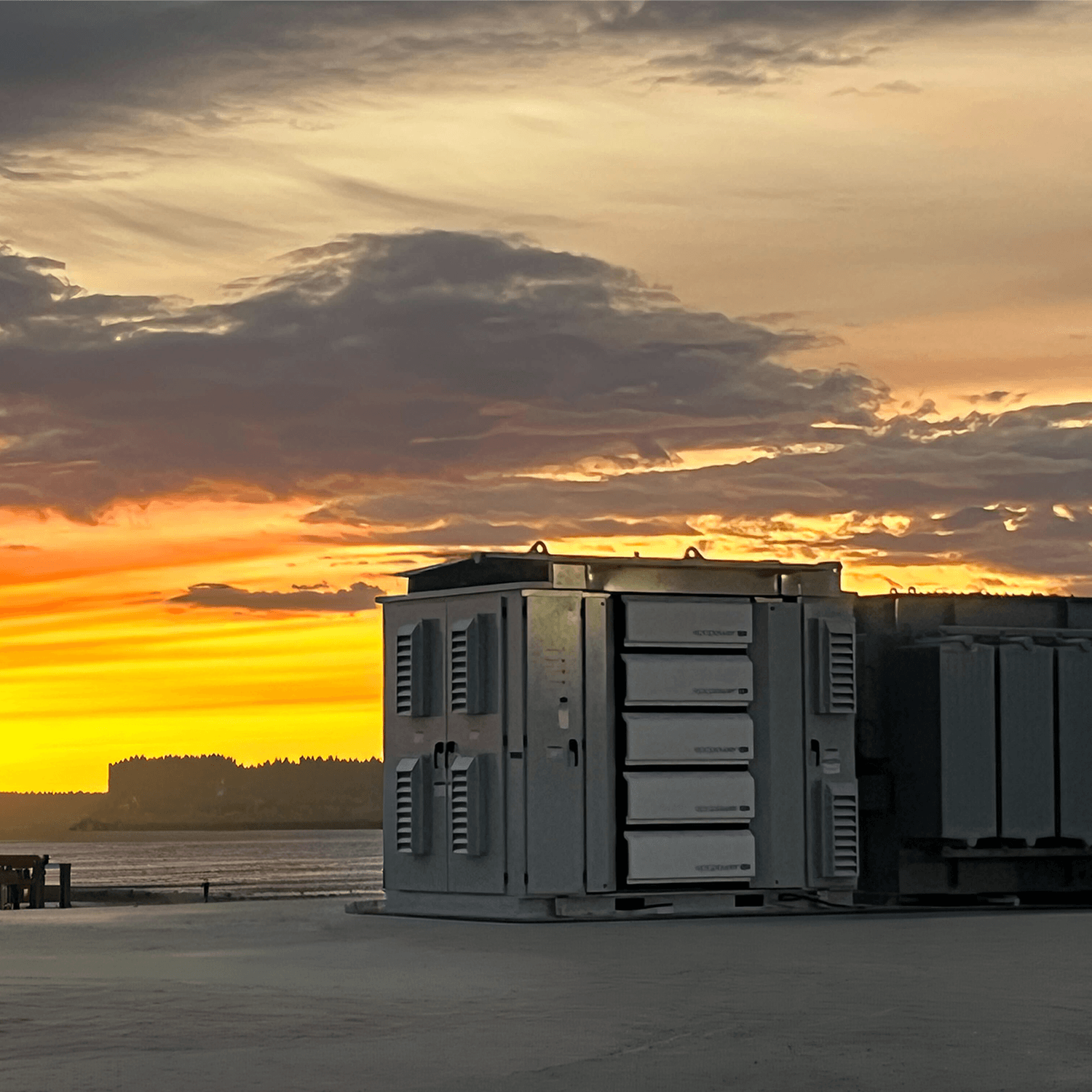
EPC Industrial equipment on a rooftop against a dramatic orange and gray sunset sky.

Ride-Through Performance

M System's and MRACK System’s fast digital controls detect and respond to grid disturbances in milliseconds, keeping systems online through events that could trip conventional inverters.

  • Engineered to support voltage and frequency ride-through per DER interconnection standards.
  • SiC-based switching enables faster fault detection and response than legacy silicon-based inverters.
  • Maintains connection through sags, swells, and frequency excursions instead of disconnecting.

Grid-Support Response

Beyond simply staying connected, M System and MRACK System actively support the grid during disturbances by providing the reactive power and voltage support operators need to stabilize the system in real time.

  • Dynamic reactive power injection during fault conditions.
  • Configurable grid-support functions to meet utility and ISO interconnection requirements.
  • 500kW block architecture allows precise, site-specific tuning of ride-through and support behavior.
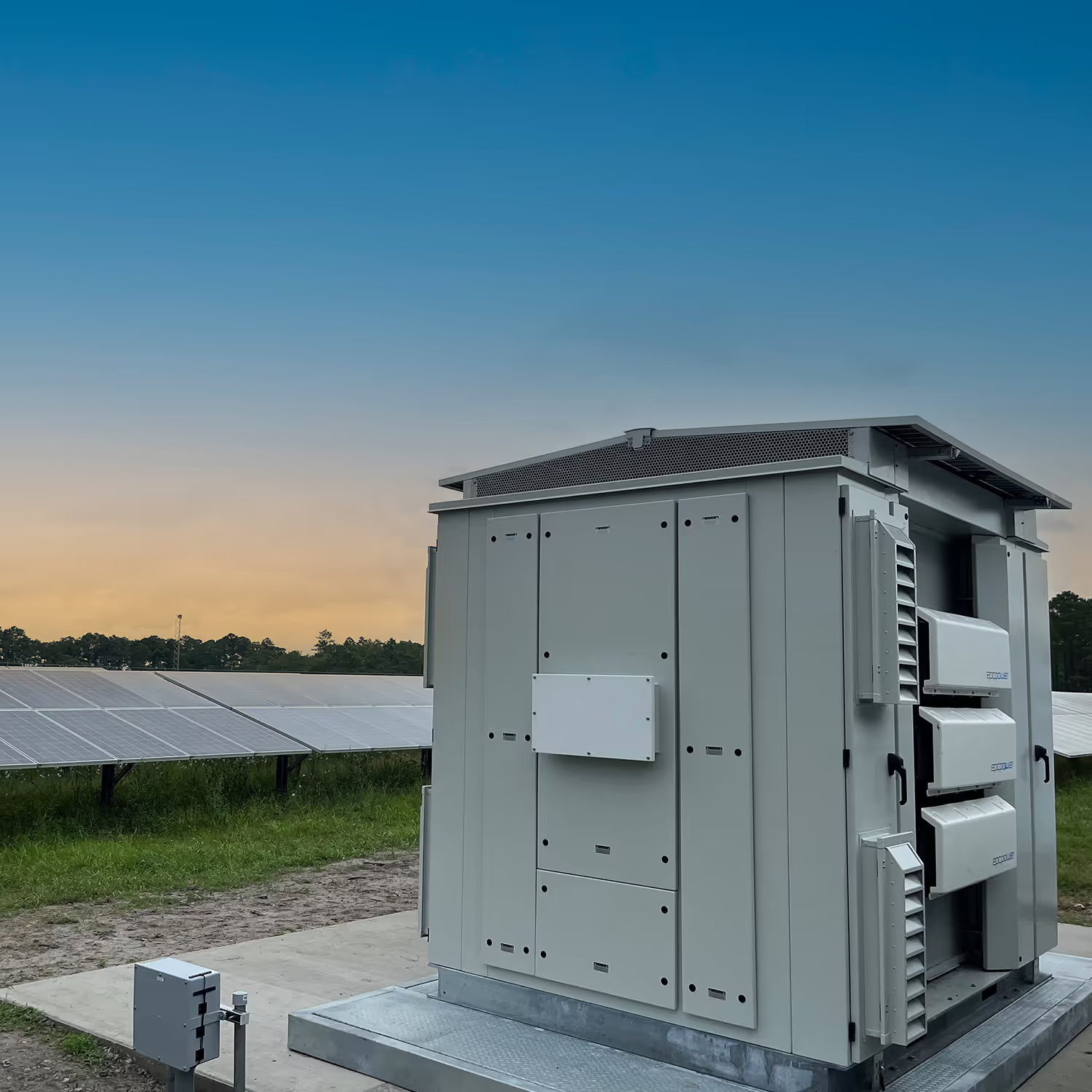
EPC Power M-System unit beside a solar array.
Aerial night view of a large battery energy storage site with long rows of containers.

Proven at Scale

Ride-through capability only matters if it holds up in the field. Our reliability record and US manufacturing footprint mean grid operators can count on us.

  • >99.9% fleet-wide availability.
  • Manufactured across three US facilities with 40+GW annual capacity.
  • IRA domestic content compliant, full points available for ITC calculation.
  • US-based service and support teams across the full lifecycle.
What are EPC Power solutions used for?

EPC Power Solutions are used in utility-scale energy applications where reliable, high-performance power conversion is essential. Their primary uses include solar generation, large-scale battery energy storage, and power infrastructure supporting data centers and other high-demand facilities. In these applications, EPC Power inverters convert and manage electrical energy to help integrate renewable generation, balance loads, stabilize the grid, and deliver dependable power where it’s needed most.

What applications are EPC Power Solutions suitable for?

EPC Power Solutions are designed for utility-scale and high-power energy applications, including solar PV plants, battery energy storage systems (BESS), microgrids, grid-forming operations, black start capability, fast frequency response, and power infrastructure for data centers. These inverters support renewable energy integration, grid stability, and reliable power delivery for large, dynamic loads—making them well-suited for modern electric grids and data center environments.

What is the control interface for M Inverter?

The M inverter uses Modbus TCP/IP as the recommended control interface.

What modeling options are available for EPC Power inverters?

Several platforms are available, including PSCAD, PSSE, ASPEN Power Factory, HIL, and others.

Do EPC Power inverters work as a UPS?

Yes. EPC Power inverters have been used in mission-critical backup power applications in place of a traditional UPS.

Are EPC Power inverters compatible with lead-acid or Li-ion batteries?

Yes. EPC Power inverters are compatible with both and many more battery (and non-battery) solutions. The ratings of the inverter may change, so please reach out to learn about our experience with various storage solutions.

Can EPC Power inverters provide grid services as well as back-up power for data centers?

Yes. EPC Power inverters can provide demand response such as peak shaving, frequency regulation, voltage support, black start capability, power factor correction and active harmonic cancellation.