
03 Sep 2026


.webp)


As the demand for AI-driven energy continues to grow, data center operators are increasingly focused on building proactive partnerships with local grids. This development reflects a broader shift in the overall regulatory environment. Nationwide, state, and local lawmakers are looking at ways to safeguard local infrastructure. For data center operators, navigating this complex landscape of evolving standards and capacity requirements is becoming as critical as the technology they house within their walls.
A recent example of this commitment is the Ratepayer Protection Pledge, where major hyperscalers have voluntarily agreed to support the grid infrastructure upgrades necessary for AI expansion. This evolving relationship between technology and utilities has become a focal point in national energy policy discussions, a topic our CRO Jim Stoshak explored in a recent Microgrid Knowledge article.
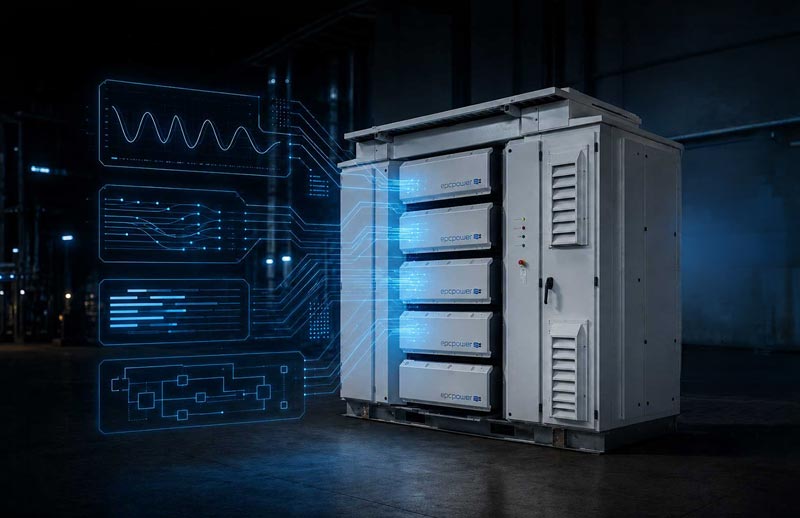
In this new era, the role of the data center is shifting from passive power consumption to active grid stabilization. To bridge this gap, the industry is moving toward an intelligent digital power infrastructure model, which happens to be what we specialize in at EPC Power. By utilizing advanced power electronics that react in millisecond timeframes, operators can transition from simply riding through grid events to supporting a more resilient environment for everyone.
Modern AI workloads are unique, creating dynamic load profiles that require more sophisticated management than traditional grid-following inverters were designed to provide. In AI training data centers, load pulsations go from full power to limited capacity almost instantaneously. These rapid fluctuations place extreme stress on both islanded systems and local utilities. A sophisticated power conversion system, like EPC Power’s M System, acts as a central nervous system for the site, functioning more like a digital power processor than a simple inverter. By sensing and responding to grid issues in less than one cycle, these systems act as a high-speed digital buffer. They smooth out the turbulence of AI pulsations by injecting or absorbing power precisely when needed, significantly reducing visibility of instability.
By implementing advanced systems, operators can ensure their facilities remain a stable and supportive part of the overall grid ecosystem. EPC Power’s Agile Grid Forming technology enables power systems to behave like conventional generators, working in concert with other grid resources to actively support and protect grid stability. This enables a facility to remain online and ride through severe grid events that would trip traditional systems, providing the high availability required by mission-critical data centers.
As the landscape evolves through 2030, the ability to operate as a resilient, digitally controlled power island or net grid contributor will be the primary differentiator for successful AI expansion. While we can’t predict what the future holds for further regulations, we can state with certainty that EPC Power will be here to support utilities and data center operators with technical sophistication and intelligent digital power infrastructure designed to keep you online and the grid stable.
Learn more about EPC Power applications here or connect with us here.
Statements regarding future developments, industry trends, and regulatory changes are forward-looking and subject to risks and uncertainties that may cause actual results to differ.